Past, Present, and Future of Women’s Rights
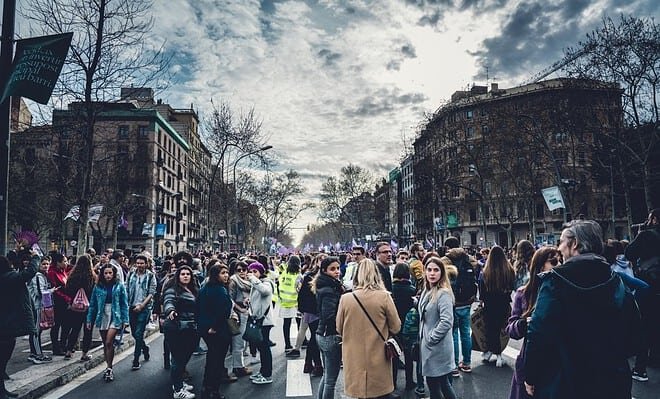
Women today are vocalizing concerns about the forfeiture of their rights, yet when I ask, “What rights are you losing?” I get a blank stare. The signs reading “No Kings” and “My body, my choice” reflect a desire to avoid living under a king’s authority, a situation from which we are thankfully free. Wasn’t that the very cause for which we fought the Revolutionary War and marked our 250th anniversary of freedom? I grew up in the 60s and 70s. My mother, born in the 1920s, witnessed the coming of age for women. The accomplishments of women’s rights are a matter of profound perplexity. I resent women today, ignorant of our past struggles, wearing vagina hats and claiming discrimination.
Today, women hold more government positions than previously recorded. From an employment standpoint, across the U.S. labor market, female-dominated fields—where women make up 70% to over 95% of workers: speech language pathology, dental hygiene, preschool, and kindergarten teaching, human resources, and nursing.
A brief look into the history of women fighting to change and how it may look fifty years from now.
Past:
European settlers brought their laws, economy, and religion to America, making men leaders of families and government.
English common law formed the basis of the American legal system. This included the doctrine of coverture, which meant that a husband erased a woman’s legal identity upon marriage and absorbed it. Women could not legally own property, sign contracts, write wills, or keep the wages they earned. Because property ownership was a voting requirement, politics in early America excluded women.
With an economy centered on farming, early America valued land ownership, manual labor, and territorial growth. Fathers passed down land to their sons to preserve family estates across generations. The survival of colony farms relied on maximizing childbirth for field labor. Women’s societal value became tethered to domestic reproduction and childcare.
The Puritans, fleeing religious persecution in England, laid the groundwork for early American culture. They followed the divine hierarchy, in which God placed men as the natural rulers over their wives, children, and servants. They regarded disobeying a husband or father not as a domestic dispute, but as a sin against God and an act of treason against the community.
Despite Abigail Adams writing to her husband, John Adams, to ‘remember the ladies’ and protect them from the unlimited powers of husbands, the Constitution purposely excluded women. This solidified the new nation’s power structure as an explicit patriarchy.
It wasn’t until the 1920s, with the ratification of the 19th Amendment, which granted women the right to vote, that things changed for white, middle-class women. During that decade, the American eugenics movement forcibly sterilized thousands of women from marginalized communities, while Prohibition began with the 18th Amendment.
This amendment’s success was because of the long-term political efforts of the Temperance Movement. Women had zero legal or economic safety nets, and alcohol was a domestic crisis. Drunken husbands spent family wages at saloons, leaving women and children destitute. Domestic violence became rampant.
People considered protecting the household an inherent duty for women; temperance and suffrage movements provided a socially acceptable way for them to enter national politics long before they had the right to vote.
When the alcohol trade moved underground to secret bars called speakeasies, the social rules shifted. They welcomed everyone who paid, including women. Men and women, for the first time in American history, drank, smoked, and socialized together publicly in huge numbers.
Prohibition created a multi-million-dollar black market, and women participated in the criminal underworld. From their kitchens, they secretly made and sold illegal alcohol, hid their moonshine, and managed profitable criminal enterprises. Women could provide financial independence for a change.
Flappers, young women of the era, rebelled against Victorian expectations by sporting short dresses and cutting their hair. Courtship practices shifted from supervised family meetings to casual, unchaperoned ‘dating’.
Women were the driving force in ending Prohibition, too. Women’s Organization for National Prohibition Reform (WONPR) argued the ban had failed. Instead of protecting families, it had created violent organized crime syndicates. It bred widespread official corruption, and made illegal, toxic alcohol a danger to their children. This didn’t sit well with the Temperance leaders who publicly branded the ‘wet’ women as a ‘disgrace to womanhood.’ They said these women were traitors to their gender and their country.
The WONPR’s anti-Prohibition efforts promoted broader ideas about personal freedoms and limited government. Individual morality and lawfulness were the responsibility of the citizen, not the state. This made it easier for male politicians to support overturning the ban.
The 1930s laid crucial groundwork for future women’s liberation by normalizing female financial independence. During the Great Depression, more women joined the workforce, but society assigned them to ‘women’s work’ that paid poorly. Wage disparities meant women earned 10 to 20 dollars less per week than men.
By the 1950s, a cultural shift forced women into rigid domestic roles. Society pressured women to marry young, leave the workforce, and focus on homemaking and child-rearing. Pregnancy led to women’s dismissal, and they could not obtain credit or checking accounts in their own names.
After a decade of rigid domestic constraints, the Women’s Liberation Movement, also known as Second-Wave Feminism, was born. While the first wave focused primarily on legal rights like suffrage, the new shift focused on systemic social, cultural, and economic inequalities.
Birth control, the right to abortion, equal pay, and Title IX make this country desirable for women to thrive in.
Present:
I know we aren’t perfect. Women have not received fair treatment since the beginning of time. “Rules for thee, but not for me.” Can we blame Eve for that? Probably. After all, she enticed Adam to eat from the forbidden fruit in the Garden of Eden.
Men founded this patriarchal country, yet they’ve forgotten why they exist. Humankind exists because of women. Still, the journey to our present state has involved fighting, to the point of imprisonment or loss of life, over the centuries.
Having witnessed the changes in women’s rights in the 60s and 70s and being an active participant in the freedoms we enjoy, it is shocking to hear women cry about losing their rights. When the United States Supreme Court issued its ruling in Roe v. Wade, it removed federal protection for women seeking abortions. The federal government cannot protect something as a law if it is not in the Constitution.
Despite this, the U.S. alone accounted for 66 to 68 million legal abortions between 1973 and the end of 2025. Even with the reversal of federal abortion protections, the total number of U.S. abortions rose from 1.06 million in 2023 to 1.12 million in 2024 and 2025.
Women still have full access to life-saving measures if they are in danger. We need to quiet the rumors.
Congress created the Department of Labor’s Women’s Bureau to enforce safe working conditions, wage equality, and pregnancy discrimination in the workplace. Although it has faced budget cuts, it remains operational.
Women protested the defunding of Planned Parenthood, saying that officials ripped their affordable care from them. No news coverage mentioned that officials lifted the ban on July 4, 2026, thereby reopening access to federal funds and medical care for low-income women.
There’s a rumor circulating that if the SAVE America Act becomes law, a married woman who has taken their spouse’s last name cannot vote. The truth is, all that’s required is documentation of their name change, such as a marriage certificate. You need this when applying for a new Social Security card or driver’s license.
No violation, loss, or reversal of women’s rights has occurred. Women have shown grit and resilience throughout the years. Too many brave, independent females have made history and given us a voice.
Transgender women are the only ‘women’ who are losing women’s rights. Around 698,500 transgender women live in the U.S. About a third of the 2.1 million American adults who are transgender fall into this category. Military service is hard for them; doctors won’t offer gender-affirming care, and they cannot vote if their ID conflicts with their birth sex. The decision on whether transgender athletes can compete in women’s sports in schools and at the Olympics is now up to each state.
Biological women make up roughly 171 million individuals in the U.S., about 50.5% of the total population, and have actively pursued their rights. It’s unfair for someone identifying as female to assert rights that belong to others.
Future:
Global population decline by 2076, will dramatically alter women’s lives, offering them more economic power, workplace incentives, and crucial healthcare. When fewer babies are born, women will have significant influence in a job market struggling to find workers.
Experts believe that biotechnology will allow reproduction outside the female body and change how we age. Women will have children without the physical toll, career interruption, or health risks of pregnancy. With advances in cellular renewal and ovarian tissue storage, we can delay or eliminate menopause, effectively resetting the biological clock.
Fifty years of AI-driven, sex-specific clinical trials will eradicate the medical gap. Therapies designed for female biology will treat heart disease, autoimmune disorders, and cancer. Care work will elevate to historical status as automated jobs take over other industries.
Because women outlive men, the super-aged societies of 2076 will be matriarchal in demographic reality. The mobility and needs of older women will help design cities, infrastructure, and healthcare systems.
To reach this future, women today need to strategically build power in key sectors, secure digital rights, and reshape corporate structures. Invest in female founded ventures, enter AI development to eliminate bias, and lead in cyber security to control architectures of data privacy. They need to normalize modern family structures, continue to push for equal parental leave, and wage discrepancies. Women should establish political and corporate infrastructure by running for local offices to build the pipeline for future national leadership. Currently, we see the tides shifting already.
When the U.S. declared independence in 1776, women lacked political rights, bodily autonomy, and property ownership if married.
From that point onward, we worked hard for centuries to achieve progress, but our efforts are not finished. The key achievements included property rights in the mid-1800s, and voting rights in 1920. The ability to open bank accounts without a husband’s signature in 1974, (the year I graduated high school) as well as have a credit card, and legal protections from Title IX in 1972. No one is trying to take away these accomplishments, nor are they lost.
Let’s reflect on the sacrifices our ancestors made for our future. While the work continues to progress, we should still keep our beginnings in mind. ‘You’ve come a long way, babe’ is a saying that continues to resonate.
Editor: Shannon Hensley