The Dawning of Evolution
- The Dawning of Evolution
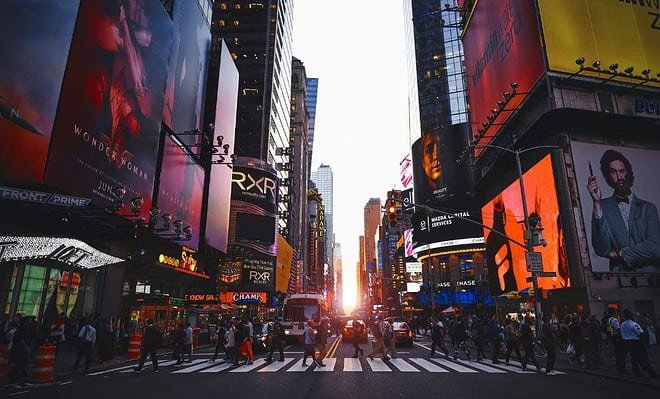
The usual loneliness of his second-floor studio apartment changed the moment the ball sailed into the basket at the final buzzer. Outside, street cheers shifted his solitary state into a sense of belonging to something significant beyond him. The Royals basketball team won it all. For miles, the crowd’s roar echoed beneath Jameson Rivers’ window. He observed a level of happiness he hadn’t witnessed in quite some time. It represented their first championship in 53 years, and in that joy, he saw the last memory he’d have of community in his city.
In the weeks that followed, the celebration stayed imprinted in his mind. Jameson replayed the sights and sounds as a beacon of hope whenever loneliness overwhelmed him. He needed the reminder that people could still share joy. For a time, he convinced himself he’d never find that kind of jubilance, but that night changed his mind.
But those memories of joyous celebration would soon dissipate into distant thought as the city changed around him. People started getting laid off from their jobs. Every week, another small business would shut its doors, the very lifeblood of the city. Familiar faces he’d see every day were disappearing at alarming rates. Graffiti spread across steel shutters. Even the brief conversations he’d had with people became shorter and colder. Eye contact happened infrequently because everyone’s minds were on their own troubles. The sense of togetherness he had witnessed on championship night slowly drained from the city.
Jameson’s perception of the city was no longer community-based. It grew into an apocalyptic-like wasteland. His usual Sunday evening errands went from a pleasant way to conclude his week to something he dreaded. He crept through the midtown neighborhood, watching everything around him. His dwindling supplies and funds made survival uncertain, so he knew he needed to provide for himself. Nightly raids occurred more frequently due to these conditions.
The typical raiders dwelled nearby, so he did his best to steer clear as they broke windows of storefronts and disregarded whatever law enforcement remained. His residency in Manhattan was no longer a fortunate thing. It was now only a matter of survival until he could get to a better situation. He was losing hope with each passing day in his world.
His head lived on a swivel for his protection. Then the orbs of light on the power lines stole his attention from safety. They didn’t carry their usual electrical current. This sight was unprecedented for him. The further he walked down the pavement, the brighter the lights became. Within a few feet, he stood in front of a large ship.
The vessel did not appear to have a front, back, top, or bottom. It hung in space like a frozen knot of translucent roots, thousands of ivory-colored strands woven into an asymmetrical mass a mile wide. Portions of the structure drifted apart and rejoined with no visible mechanism, as if the ship were constantly rearranging itself according to needs no human could understand.
Its surface was not metal. Instead, it resembled polished bone covered by a thin layer of liquid crystal. Colors rippled beneath the skin in slow waves—deep violets, greens, and impossible shades that appeared to vanish when viewed directly. No windows, engines, antennae, or weapon ports were visible. In fact, there was no sign that someone had ever built the object. It looked grown.
Murmurs came from the framework in the middle of the cityscape. He could not comprehend this. Extraterrestrial beings lived in books and movies, not in his real life. He brushed his hands over his face to check whether he had really lost his mind, but everything on the road was still there. Closer inspection revealed entire ecosystems embedded within the vessel. Forests of crystalline growths extended through hollow chambers. Vast sacs pulsed with bioluminescent fluid. Small organisms drifted through exposed cavities, tending the vessel the way blood cells maintain a living body. The most unsettling feature was scale. They took measurements, and they changed each time. Sometimes the vessel appeared several hundred meters long. Other times, sensors suggested parts of it extended for dozens of miles through dimensions individuals outside their species could not perceive. The ship’s true shape was larger than the space it occupied.
Crowds formed when the visitors identified themselves as Tarkans. They appeared as gray, slimy beings that glowed in streetlights. Their shared language was English, which made them easier to understand. The newcomers told the sizable crowd that they had been watching New York’s decline since its founding. From what they saw, they believed the city’s people were acting against their true nature. Fear, anger, and division had buried the compassion and empathy they believed still existed beneath the surface. They stated their purpose was to save humanity from destroying itself. However, their mission was not entirely selfless. The aliens believed the positive energy humanity could generate would restore their dying home planet, making the survival of both civilizations dependent on one another.
This proposal offered a life outside of the one in front of him. A chance to escape excited him. His life possessed worth. It was a steady quest for survival. He experienced a desperate longing to remain part of civilization. But his attachment to mortality scared him. The comforts of life on Earth, such as food, water, and shelter, were the norm. Not to mention, he understood his neighbors here. A familiar face was almost always available even in these dire times of isolation. New environments meant leaving behind whatever comfort he had left, yet staying meant facing the city’s collapse alone.
“Does no one remember three weeks ago? When we all celebrated the same team, the same moment?” he called out to the crowd. His words came out stuttered, but he couldn’t let go of the feeling of happiness he’d witnessed amongst them.
“It was a night, Rivers. Nights can’t carry us out of poverty,” his neighbor replied.
“No, but they can remind us we were together all for the same thing,” Jameson said as his body shook.
“We only have one chance at this. I’ve had enough of pleading, acquiring from others, and taking. New York is not the same as it once was.”
A woman in the crowd lamented, “We’re all exhausted, starving, and penniless, and there’s no one coming to rescue us.” She stood next to her husband, frail from starvation.
Jameson knew the masses outnumbered him, and he needed to come to terms with his fate regardless of his inner hope. The Tarkans’ promises felt hopeful, but still unknown. With no promise of a future Earthside, evolution was the only way forward.
When he agreed to change, he lined up with ten others who shared his sentiment. Staring at the massive structure ahead, he watched the tiny orbs within a circular frame scramble around as if trying to reveal its purpose. They looked straight ahead at the large, triangular point while they waited for instructions. In Jameson’s mind, if staying alive meant transforming into a beam, then he would do it. These ten wished to escape the end of humanity and the cruelty it surely would bring if they stayed.
Jameson could smell the fear around him. These volunteers didn’t know what to expect from becoming this new being. There were so many unanswered questions. Would the process hurt? What could be expected afterward? Were they doing the right thing? They were all mortal at their core. Not knowing anything else, they could understand why some were hesitant. But when the alien instructed the group to face forward and place their hands behind their backs, Jameson felt like he was surrendering rather than entering a new life, and the cost of that surrender finally felt real.
He glanced around at the others. Their mouths and eyes opened in surprise. One woman turned and ran, another fell to the ground crying. An elderly couple hugged each other. Confused, Jameson wasn’t sure if he was comfortable with his rash decision. But the alternative seemed worse, because staying offered no safer future.
His dark eyes surveyed his surroundings. A crowd had gathered, loud at first and then, as the machine hummed, a hush fell over them.
“Wait! I need to know, will this hurt?” Jameson asked. The remaining participants looked at the alien. “I mean, will my body evaporate into this beam? Or is it sucking out my soul?”
The gray figure tilted his head. “Only if you resist the transition,” he answered.
“What? What does that mean?” Jameson shivered at the matter-of-fact response. His doubts got the best of him as they all watched a large metal machine coming toward them.
“There is nothing to fear,” the alien told the group. “A white beam will be seen here,” he pointed to the front of the satellite looking mechanism. “We ask that you stand as still as possible so we can collect all your energy, or what you humans call the soul. We then transport you to another planet where you will live a new life. A new beginning where you will continue to learn, teach the newcomers how to navigate their alternative world, and to experience joy once more.”
This was what Jameson needed to hear. He fell silently in line. One by one, he watched as the beam absorbed them all. When it was his turn, a tear fell onto his cheek, the last human emotion he would experience on Earth as he was ushered into his alternative life.
Editor: Lucy Cafiero