The Tale Of Thecla St. John
- The Tale Of Thecla St. John
- Run Gran Run
- A Whirlwind of Trouble
- Uncle Albert’s Ghostly Encounter
Each breath ignited a fire in my lungs. Still, I remained in place as my hand traced the aged closet that displayed my grandmother’s bold, African print frocks a year after her death.
I don’t know why I chose this dreary, overcast day to store her away. It added to the weighty silence in the air and caused the house itself to sigh with the finality of its fate.
With lips caught between my teeth, limbs heavy, I clutched onto a supernatural phenomenon to get through.
“Hi, Gran,” I said, as a calming chill permeated my body.
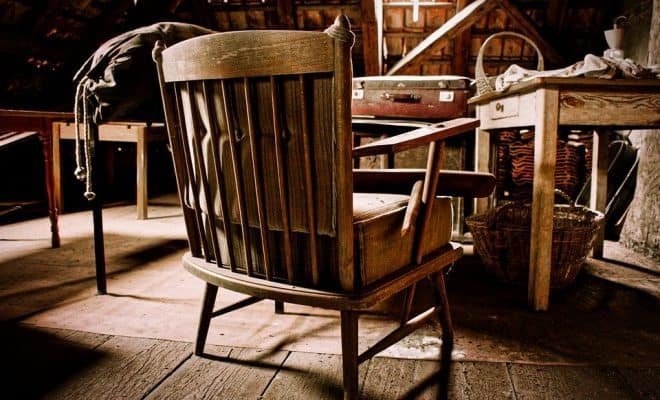
There was no need to turn around to confirm that the familiar squeak originated from her rocking chair. I’ve heard it all my life.
As a child, I sat on the cool veranda floor beside her, captivated by the mix of rosemary and coconut oil, while she told me legends of her childhood, painting pictures of villagers and myths woven through our heritage. Teresa, my birth mother, with all the venom in her mouth, would say, “Stop fillin’ she head wid all da nonsense.” But Gran never listened.
There was one time, though, when my grandmother quit sharing her stories, but it wasn’t because of that woman. It was because of my sobs, a result of the tragedy of Thecla’s life, a stranger whose suffering had me clinging to my childhood memories with my grandmother.
In my defense, even Thecla’s birth was unfavorable. She drew her first breath on the floor of an outdoor kitchen while God struck bowling pins with heavy spherical balls above. This was the beginning of the hurricane season, when Grenada held its inaugural general elections. Yet, the defining moment in 1951 for Thecla was when Reginald St. John lost his beloved wife and part of himself.
Bernadette St. John, then twenty, was married for one year to a guy over two decades her senior. But Reginald adored his wife, infatuated from the initial time his eyes fell on her petite frame strolling down the track near his sister’s house.
And she grew to love him.
“Losin’ da’ woman destroy dat man,” Gran said. “He lived in the rum shop after dat.”
It was no surprise when his sister took the energetic baby. The problem was that Claudette, God bless her soul, was maternally inadequate. She was rigid, with no children, and struggled to care for the child. So, she hired a wet nurse.
This lady was my grandmother.
At the time, Gran had her two: my uncle Albert and my mother. The Wicked Witch of the West was four months old when Thecla deprived her. I’m curious if Teresa’s harsh scolding of her aging mom stemmed from having to share her with someone she resented. Then again, I don’t believe there is a soul on earth who has ever gained her affection.
Considering how they were raised, Thecla and Teresa should have been as close as siblings.
Personally, I would have loved a sister. But I can grasp why that woman wouldn’t appreciate this. Envy and selfishness defined her. She had to be jealous of Thecla, with her light skin, bold eyes, and straight hair.
Although much darker and unmemorable, my mother was the fortunate one. She had two parents who dedicated themselves to her, whereas Thecla had a father who resented her for “killing his wife,” and an aunt too self-indulgent to pay any attention to her fragile niece. But my mom, of course, consumed by the roaring flame in her heart, didn’t understand this. And as expected, she made the girl’s childhood miserable.
Poor Thecla already had her hands full without having to deal with a new tormentor.
Her mother died that night giving life, but she never left. She never left Thecla, that is.
As if to punish her daughter, Bernadette invaded Thecla’s dreams at nighttime, causing her to suffer from chronic fatigue and learning difficulties. So, it wasn’t surprising Thecla was academically challenged. For this, something beyond her control, the children punished her.
Teresa encouraged the other students to destroy Thecla’s belongings, creating a lingering dark cloud. As a result, Thecla stopped all eye contact and reduced her speech to answering direct questions.
Thecla became desolation manifested.
On four occasions, Gran was called to the school when teachers discovered Thecla’s face red and snotty-nosed, cowering after her break money was taken and she had been teased into submission.
“Ah neva taught me own daughter could be one a dem miscreants,” my grandmother said with gritted teeth. “And dem teacher say she was the ringleader, nah.”
This revelation did not surprise me. What baffled me was that Teresa kept it hidden from her mother. Unfortunately, Grandma never accepted misbehavior and punished Teresa, which she blamed Thecla for, and bullied the girl more.
Thecla had to deal with this and the rest of Bernadette’s manifestations—the physical wounds, the sickening snap of broken bones, and the ugly purple bloom of bruises.
About four years after a head injury, Thecla fell twenty flights of stairs. Once, she nearly drowned, rescued by concerned beachgoers, as Gran couldn’t swim. Hence, her fear of the sea. And in the Caribbean, where sparkling white sand and clear blue waters are usually the primary venue for events, this must have been exclusive.
Younger me, whenever my feet touched the hot surface, sprinted to the almond or seagrape trees, not for the shade, but to strip them of their hard-earned fruits. I devoured the grapes immediately, but the almonds I packed in plastic bags I brought for that purpose. Later, I pounded them with a hammer, exposing the sweet nut inside. It was excessive effort for a measly seed, but the experience was part of childhood.
This was what Thecla lacked.
Fortunately, Bernadette grew weary in Thecla’s teens and allowed her downtime. “De nightmares came every so often, but at least she wasn’t getting bruises.”
Long before Thecla could vote, Gran had stopped being her nanny, but their relationship carried beyond the salary.
When she was around, the cocoa got picked, the nutmeg dried, the clothes washed, the food cooked, and the animals fed. She used to wash and plait my Gran’s grey kinks in cornrows and grease her skin with coconut oil. Thecla even caught crayfish in the stream-like river to make Gran’s favorite waters.
She was as much a part of Gran’s life as her offspring, which was why her news was a stab.
After ignoring his daughter for years, Reginald resurfaced, graduated from his vagrancy. At his side was a young man intended to become his son-in-law.
Thecla faced a forced marriage to a stranger, arranged by another stranger. She was obedient, though, desperate for what her father withheld.
“Ah knew he had money from the time ah see him. Dem pleated pants and shiny shoes is rich people clothes. And dat Reginald wouldn’t stop praising him. But ah didn’t want her to marry him. I wanted de chile to do it wid somebody she love.”
So, in 1971, while Grenada was under the leadership of its Premier, Eric Matthew Gairy, Thecla married the second son of the wealthiest tradesman on the Island of Spice and became Mrs. Matheson.
“It was de biggest wedding ah ever see. People come from all ova in dey Sunday best. An’ food ah neva eat before in some fancy plate.”
Not too long after, Thecla gave birth to her first child, Cuthbert Matheson.
“He was a rolly-polly and de only one who coulda make she smile. Ah… she love de boy nah.”
Those were Thecla’s glory days—sprawled in the damsel tree shade while the sun set a radiant orange, relaxed as the slow pace of island life shielded the problems of the world.
She spent every waking moment with her son, entertaining for toothless giggles more filling than meals, only detaching to tend to her husband. Then, her stomach rose again. “De second time, dat girl bloomed like a bougainvillea flower. Her skin glowed, and she get round all over.”
Agnes Matheson was born in the year 1974. Nineteen years after Hurricane Janet thrashed all wooden structures and stripped trees. “She look like she modder did when she was younger.”
Thecla brought them on regular visits to Gran, who grew fond of Richard. “Ah was jus happy he seem to love he family. Thecla to. Dat all ah wanted for her.”
But that picture of perfection was far too wonderful. Bernadette couldn’t stand the cheerful scene any longer, for she bursted with spite. Her daughter reveled in happiness, yet she wasn’t permitted half as much time. Driven by jealousy, she sneezed on little Curtbert, causing him to catch pneumonia.
He died on the night of January 16th.
“I see it, ur kno. He jus… make ah noise… and den he left. I try to wake him but… he neva even winch… he aint hear he mammy voice…dats how I know… he really gone. It should have been me.”
Those were the last words anyone heard Thecla say. She went mute after…not even speaking to her beloved drool monster. Not to Gran.
Thecla still created a dramatic scene at the funeral, jumping onto the coffin as it was being lowered to its final place. Weirder was that Thecla didn’t shed a single tear. Not one drop escaped to mourn the death of her son.
My grandma said, “Ah realize den tha’ Thecla was gone.”
By mid-March, Thecla needed a nurse. She took on a solitary life while the nightmares tore through her barriers. Screams pierced the nights as violent shakes accompanied her tantrums. Eyes bulged on her frame too skeletal to hold the clothes in place.
Her husband hid out in another room, the times he was at home.
With Thecla in no position to fulfill her marital duties, Richard returned to his past life and grazed around unattached cattle. He kept multiple women, but nobody pointed fingers at him; they all sneered at his wife for going mad.
In October, one of Richard’s ladies had persuaded him to sentence Thecla to America, where better medical treatments were available.
Gran received a letter after that, stating Thecla suffered from nausea, purging her stomach the entire trip. The message also stated that her pretty, pale complexion was now pink from the restraints because of her paranoia. Then all news of her died.
Three years later, as my grandmother stood among fluffy, silk cotton seeds on freshly raked grass, a familiar figure emerged from the midst of the hanging laundry. At first, she believed the extreme heat of the dry season got to her. But the smile was too sincere to be an illusion: the hug too warm to be fake.
Her darling Thecla had returned to her.
Gran’s tears mingled with Thecla’s as they embraced, and that day, two old friends chatted long after the radiant hues descended into the sea.
Thecla visited Grandma daily after that. She said, “Gran, ya de only one da nah watch me like ah crazy.” Almost always, she brought Agnes along, and we played together in the breezy yard, chased balls and jumped rope, as Thecla and Teresa did.
It took Thecla two years, but during the revolutionary era, she gave birth again. “Dis chile remind me so much ah Curtbert,” she confessed, and holding a wrinkled hand, she finally cried for the child she lost. Then one night, Bernadette returned for a last visit, uniting the souls of a mother and son.
Thecla’s funeral was small, with the immediate family, the pastor, and her friend.
I insisted on visiting, so my grandmother took me to the grave once. It’s just a cold, concrete headstone etched with a simple phrase, barely visible:
Thecla Constance Matheson 1951-1986
May you find peace at last
Every time I think of my grandmother, I remember Thecla and hope she, too, is at peace.
Editor: Michelle Naragon & Shannon Hensley